
Chimney Doctors of Colorado: Premier Fireplace Installation in Alma, CO
Alma, CO stands apart as a community defined by its geography. As the highest incorporated town in North America at 10,578 feet, living here requires a level of preparation and resilience that few other places demand. For homeowners in this rugged section of Park County, a fireplace is far more than an aesthetic upgrade. It is a vital survival tool against the sub-zero temperatures and fierce winds that sweep over Hoosier Pass. At Chimney Doctors of Colorado, we specialize in quality fireplace installation, ensuring products that last and work strong through it all.
How Does Burning Different Fuels Impact Installation Requirements?
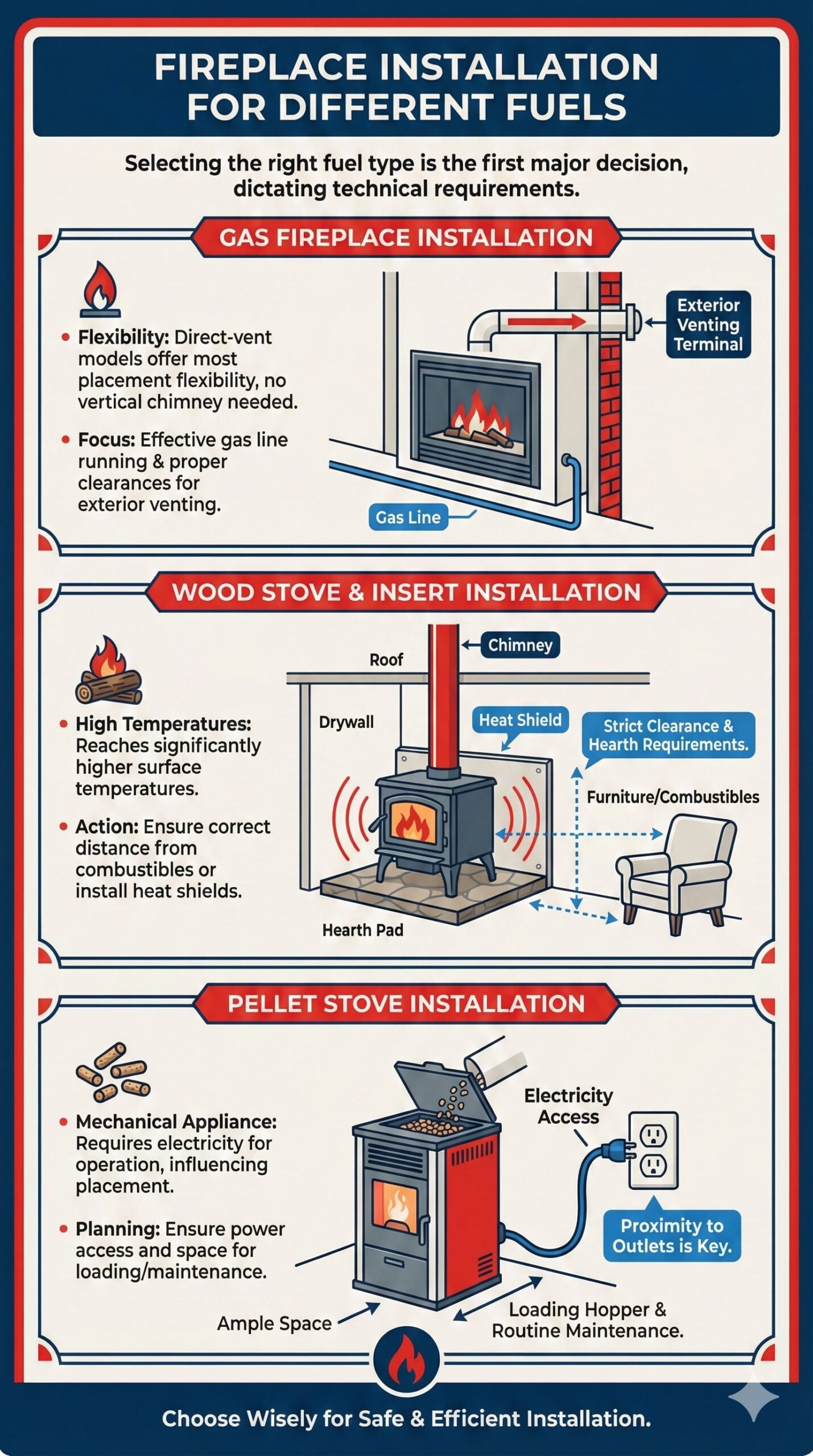
Selecting the right fuel type is the first major decision in the installation process, and it dictates the technical requirements of the job. Each fuel source—gas, wood, and pellet—has specific needs regarding venting, clearances to combustibles,and floor protection. Understanding these differences allows us to plan an installation that integrates seamlessly into your home while operating as safely and efficiently as possible.
- Gas Fireplace Installation: Gas fireplaces, particularly direct-vent models, offer the most flexibility in terms of installation location. Because they do not rely on a vertical chimney for draft in the same way wood stoves do, we can often vent them horizontally through a side wall. This allows us to install gas units in basements, bedrooms, or room additions where a traditional chimney might be impractical. The installation focuses heavily on running the gas line effectively and ensuring proper clearances for the venting terminals on the exterior of the home. We also prioritize the finishing details, framing out the unit to allow for beautiful tile or stone surrounds that meet the manufacturer’s heat specifications.
- Wood Stove and Insert Installation: Installing a wood-burning unit requires a strict adherence to clearance and hearth requirements. Wood stoves reach significantly higher surface temperatures than other appliances. We must ensure that the stove is positioned at the correct distance from drywall, furniture, and curtains, or install heat shields to reduce those distances. The venting system typically requires a Class A all-fuel chimney pipe, which must be routed vertically through the roof. We carefully plan the path of this pipe to avoid roof trusses and electrical wiring in the attic. Additionally, we install substantial hearth pads that provide the necessary thermal protection for your floors, ensuring that stray embers or radiant heat do not pose a risk to the subfloor.
- Pellet Stove Installation: Pellet stoves are mechanical appliances that require access to electricity, which influences where they can be placed. During installation, we plan for proximity to outlets and ensure there is ample space for loading the hopper and performing routine maintenance. The venting for pellet stoves is often smaller in diameter than wood stoves, utilizing a specialized L-vent pipe. This allows for more discreet venting options, but the pipe layout must still be carefully designed to prevent ash buildup in horizontal runs. We focus on creating a short, direct venting path to assist the internal fans and keep the unit running cleaner and quieter.
How Do We Determine the Best Location for a New Fireplace?
Choosing where to install a new fireplace involves balancing aesthetic desires with structural realities. We work closely with homeowners to find a spot that anchors the room visually while allowing for the most efficient venting path possible. In a two-story home or a cabin with complex rooflines, finding a straight shot for the chimney pipe is critical for maintaining good draft and minimizing installation costs.
- Venting Pathways: The most efficient chimney is one that runs straight up. We look for locations where we can run the pipe through closets or corners of upstairs rooms to avoid structural beams and roof trusses. If a vertical run is not possible, we calculate the maximum allowable offsets. For gas fireplaces, we have more flexibility and can often vent horizontally through an exterior wall, which opens up placement options in basements or rooms without roof access.
- Floor Joist Direction: For heavy units, such as masonry fireplaces or large wood stoves, we need to assess the floor framing. If the fireplace runs parallel to the floor joists, we may need to install blocking or sister the joists to handle the additional weight. Positioning the unit perpendicular to the joists distributes the load more evenly. We check these structural details during our initial site visit to prevent sagging or floor movement after the installation is complete.
- Clearance to Combustibles: Every fireplace has specific clearance requirements mandated by the manufacturer. We measure the available space to ensure we can frame the unit safely without bringing heat too close to windows, doors, or drywall. This often involves planning for a non-combustible hearth extension on the floor and specific framing headers above the unit. We map out these clearances before the first hammer swings to ensure the final fit is perfect and compliant with local codes.
Alma, CO: Living at the Top of the World
Alma is a town defined by its elevation and its rugged spirit. It attracts people who want to be close to the sky and the mountains. The town has a deep connection to the mining history of the Colorado mineral belt. Structures like the Paris Mill and the small cabins scattered through the valley serve as reminders of the perseverance required to live here in the late 1800s. Today, that same resilience is found in the local community, where neighbors look out for one another during heavy snows and celebrate the unique lifestyle that comes with living above 10,000 feet.
For outdoor enthusiasts, Alma is a dream location. It is the starting point for some of the most accessible 14,000-foot peaks in the state, including Mount Lincoln, Mount Democrat, and Mount Bross. The Mosquito Range offers endless opportunities for hiking, backcountry skiing, and photography. Unlike the resort towns nearby, Alma maintains a quiet, authentic atmosphere. We love working here because the homeowners value durability and practicality. They understand that in this climate, quality craftsmanship is the only thing that stands between a warm home and the freezing elements.
Can a Fireplace Be Installed in a Room Without an Existing Chimney?
Many homeowners in Alma want to add a fireplace to a bedroom, den, or living area that was not originally built with one. Fortunately, modern installation techniques allow us to add a fireplace to almost any room in the house without needing an existing masonry chimney. We utilize factory-built systems and specialized venting pipes to create a safe and effective heating source where none existed before.
- Zero-Clearance Fireplaces: These units are heavily insulated and designed to be framed directly into wood walls. We can build a new chase (a false wall or box) to house the fireplace, finishing it with drywall, stone, or tile to match your interior design. Because they do not require a massive masonry footing, they can be installed on upper floors or in renovations without major structural changes to the foundation.
- Class A Chimney Pipe: For wood-burning stoves installed in rooms without a chimney, we install Class A insulated chimney pipe. This stainless steel pipe is rated to handle high temperatures and can be routed through ceilings, attics, and roofs. It requires only two inches of clearance to combustibles, allowing us to run it through standard framing. We use support boxes and attic insulation shields to ensure the pipe passes through the home safely, creating a complete venting system from scratch.
- Direct Vent Gas Technology: If you prefer gas, direct vent technology is a game-changer for installation flexibility. These systems use a coaxial pipe -a pipe within a pipe – to draw fresh air in from the outside and exhaust fumes out. We can route this venting horizontally directly behind the fireplace, terminating it on the exterior wall. This eliminates the need for a vertical roof penetration entirely, making it possible to install a fireplace in first-floor rooms with occupied spaces above them.
What Structural Reinforcements Are Added During Installation to Handle Alma’s Snow Load?
When we install a new chimney system in Alma, we have to think about more than just the weight of the pipe. We have to consider the weight of the snow that will accumulate around it. A chimney chase extending through the roof can act as a snow fence, causing massive drifts to pile up against it. This places significant lateral stress on the structure. Our installation process includes specific framing techniques to handle these heavy loads.
-
Cricket Installation: If the chimney chase is wider than 30 inches, building codes and common sense dictate that we install a cricket. This is a small, peaked roof structure built on the high side of the chimney. It splits the sliding snow and water, diverting it around the chimney rather than letting it pile up against the back. We frame these crickets into the roof deck during the installation to protect the chimney from the crushing weight of a sliding snowpack.
-
Chase Reinforcement: For the chimney chase itself, we use tighter stud spacing and structural sheathing. Standard construction might place studs every 16 or 24 inches, but in high-snow areas, we often reinforce the framing to prevent the walls of the chase from bowing inward under the pressure of deep snow drifts. We also ensure the chase is bolted securely to the roof trusses, making it an integral part of the roof structure that can withstand the sliding forces of snow and ice.
-
Pipe Support: For metal chimney pipes extending above the roof, we install heavy-duty roof support systems. The weight of snow and ice sticking to the cap and pipe can be surprisingly heavy. We use telescoping roof braces that triangulate the pipe to the roof deck, preventing it from buckling or shifting. This ensures that even after a heavy winter storm, the venting system remains vertical and structurally sound.
How Do We Frame a New Chase to Prevent Cold Air Transfer?
In a climate as cold as Alma’s, cutting a hole in your roof or wall to install a fireplace introduces a risk of heat loss. If the installation is not detailed correctly, the new chase can act as a superhighway for cold air to enter the home. We view the chase as an extension of your home’s thermal envelope. Our installation process includes rigorous insulation and air-sealing steps to ensure your new fireplace adds heat without letting the cold seep in.
- Firestops and Air Barriers: At every level where the chimney passes through a ceiling or floor, we install firestops. These metal plates are primarily for fire safety, but we also seal them with high-temperature fire caulk. This blocks the “stack effect” within the chase, preventing warm air from your home from rising up into the attic and stopping cold attic air from dropping down into your living space.
- Insulating the Chase: We insulate the exterior walls of the chase just as we would the walls of your home. We use faced fiberglass insulation or rigid foam board to create a thermal barrier. Additionally, we often insulate the “lid” of the chase just below the termination cap. This keeps the air inside the chase warmer, which helps maintain a strong draft and prevents the cold outdoor air from cooling the chimney pipe excessively, which can lead to creosote buildup.
- Sealing the Penetration: The point where the gas line or fresh air intake enters the home is a common source of drafts. We use expanding foam sealants around these penetrations to create an airtight seal. For the fireplace unit itself, we apply insulation around the framing headers and the nailing flanges. This ensures that the unit is thermally isolated from the exterior sheathing, keeping the cold air on the outside where it belongs.
How Does the Installation of a Modern Gas Insert Differ from a Full Remodel?
Homeowners often ask about the difference between slipping an insert into an existing fireplace versus ripping it out for a new unit. The installation processes are quite different. An insert is designed to retrofit an existing masonry or factory-built firebox, utilizing the existing structure. A full remodel involves demolition and framing. We help you decide which path is right for your home based on the condition of your current fireplace and your design goals.
- Insert Installation: The focus here is on utilizing the existing pathway. We drop two flexible aluminum liners down the existing chimney flue—one for intake air and one for exhaust. The installation is less invasive, involving mostly mechanical connections and electrical work inside the firebox. We seal the damper area to prevent heat loss and slide the unit into place. This is a great option for updating an inefficient open masonry fireplace without major construction work.
- New Construction Fireplace: If you want to remove an old, damaged fireplace or change the location entirely, we perform a full tear-out. This involves removing the old masonry or metal box, reframing the wall to fit the new unit’s dimensions, and often running new venting. This allows for a completely new look, as we can change the height, width, and style of the fireplace. It also allows us to upgrade the insulation behind the unit and fix any structural issues in the surrounding wall that may have been hidden for years.
- Venting Differences: With an insert, we are constrained by the size of the existing flue. We have to ensure the new liners will fit. With a new construction fireplace, we install a dedicated rigid venting system. This rigid pipe offers better flow characteristics and allows for more complex venting runs. We can route the vent around obstacles or terminate it in a better location on the roof, giving us more control over the final performance of the unit.
Trust Chimney Doctors of Colorado for Fireplace Installation in Alma, CO
At Chimney Doctors of Colorado, we believe that a fireplace installation is a permanent upgrade to your quality of life. We take pride in the technical precision of our work. From calculating the correct venting height to ensuring the final stone surround looks flawless, we handle every detail with care. If you are ready to add warmth and character to your Alma home, contact us today. Let us show you how a professional fireplace installation can transform your living space.